

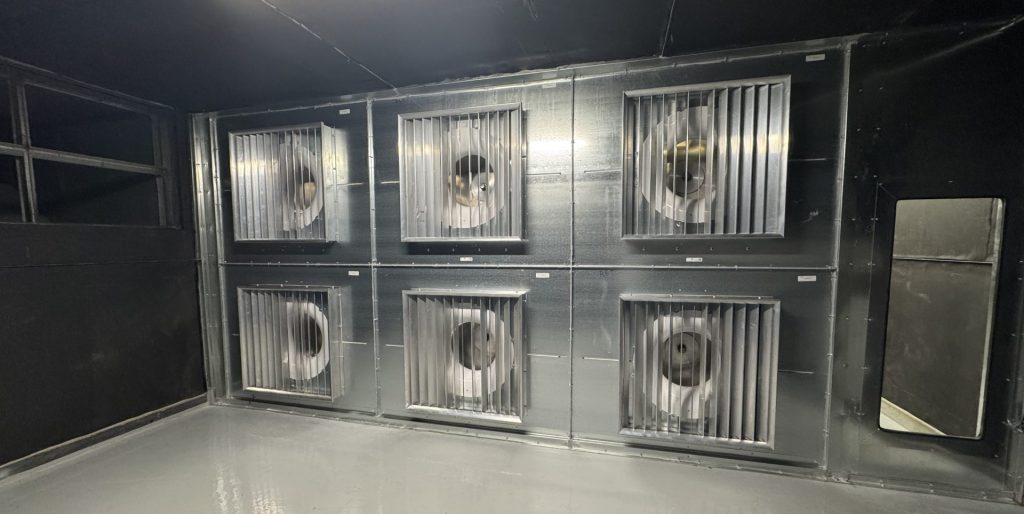
Commercial HVAC systems are built to move a large amount of air through a building every day. In many older buildings, that airflow is handled by one or two very large fans in an air-handling unit (AHU). As commercial HVAC systems age, building owners and facility managers often start looking for ways to improve reliability without replacing an entire AHU.
One upgrade that has become increasingly popular is the fan wall, also called a fan array.
What Is a Fan Wall in an HVAC System?
A fan wall is a group of smaller fans installed together inside an AHU, replacing a single large fan and motor to move air through the building.
Instead of relying on one large fan to move air throughout the building, a fan array uses multiple smaller fans working together to deliver the same airflow. These fans can be controlled by a variable frequency drive (VFD), allowing the system to adjust fan speeds based on the building’s needs. These types of systems are commonly installed in:
- Office buildings
- Hospitals and healthcare facilities
- Schools and universities
- Commercial high-rise buildings
- Large residential buildings
Because fan arrays are installed within existing air-handling units, they are often used as retrofit solutions for older commercial HVAC systems rather than replacing the entire system.
How a Fan Wall Retrofit Works
In many older buildings, the air-handling unit was installed when the building was first constructed. These systems often rely on one large fan that has been running for decades. When that fan begins to fail, replacing the entire air-handling unit can be expensive and difficult, especially if access is limited.
A typical fan wall installation includes:
- Removing the existing large fan and motor assembly inside the air handler
- Installing multiple smaller fans in the same space
- Connecting the fans to controls that allow them to operate together and adjust speed as needed
- Testing and balancing the airflow to ensure the system performs correctly
Because the individual fans are much smaller, they can usually be brought into the building through standard doorways, hallways, and elevators. This makes fan wall retrofits much easier than replacing a full air-handling unit.
Why Commercial Buildings Are Installing Fan Arrays
Many building owners choose fan wall retrofits because they solve several common problems found in commercial HVAC systems.
- Improved Reliability Through Redundancy
Traditional, older AHUs often rely on one or two large fans. If one of those fans fails, the building may lose airflow completely.
Fan arrays improve reliability by using multiple smaller fans. If one fan stops working, the remaining fans can increase speed to maintain airflow while repairs are made. This helps prevent unexpected HVAC shutdowns, which is especially important in large commercial buildings. - Lower Noise and Vibration
Large belt-driven fans can create significant noise and vibration that travels through the ductwork and into occupied spaces. This can become a problem in office buildings, schools, and healthcare facilities.
Fan walls use smaller direct-drive fans, which are typically much quieter. Many buildings install fan arrays specifically to reduce noise complaints and improve overall comfort. - A Cost-Effective Alternative to Full HVAC Replacement
Replacing an entire air-handling unit can be a major expense, especially in older buildings where equipment is difficult to remove. Fan wall retrofits allow building owners to upgrade the fan section of the system without replacing the entire unit.
This approach helps extend the life of the existing HVAC system while improving performance and reliability.
When Should a Commercial Building Consider a Fan Wall Retrofit?
Fan arrays are often a smart solution when a building is experiencing:
- Frequent fan or motor failures
- Increasing maintenance costs
- Noise issues from older equipment
- Limited access for large equipment replacement
- Aging air-handling units that still have usable components
Instead of continuing to repair older fans, many building owners choose to upgrade to a fan wall system that is more reliable and easier to maintain over the long term.
A Practical Upgrade for Aging HVAC Systems
Fan wall retrofits have become one of the most effective ways to modernize an older commercial HVAC system without the cost and disruption of a full replacement. By replacing large aging fans with multiple smaller fans, buildings can improve airflow, reduce noise, and increase system reliability.
For many commercial buildings, it’s a practical upgrade that provides long-term value while keeping the existing air-handling unit in place.